
Lecce is one of those cities that can surprise you from the moment you take your first steps through its historic center. Elegant honey-colored buildings, richly decorated churches, hidden squares, and ancient Roman remains tell the story of a city with more than two thousand years of history.
Located in the heart of Salento, in southern Puglia, Lecce is best known for its extraordinary Baroque architecture. The local limestone, soft and easy to carve, allowed craftsmen to create elaborate façades, balconies, columns, figures, and intricate decorations, giving rise to a distinctive architectural style known as Lecce Baroque.
But Lecce is about much more than art and architecture. It is a city to experience slowly: wandering through the narrow streets of the old town, stopping for a traditional caffè leccese, tasting a freshly baked pasticciotto, and ending the day with a meal inspired by Salento’s culinary traditions.
Only have one day in Lecce?
This itinerary will help you discover some of the city’s most important attractions without turning your visit into a race against the clock.
Morning: Start at Porta Napoli
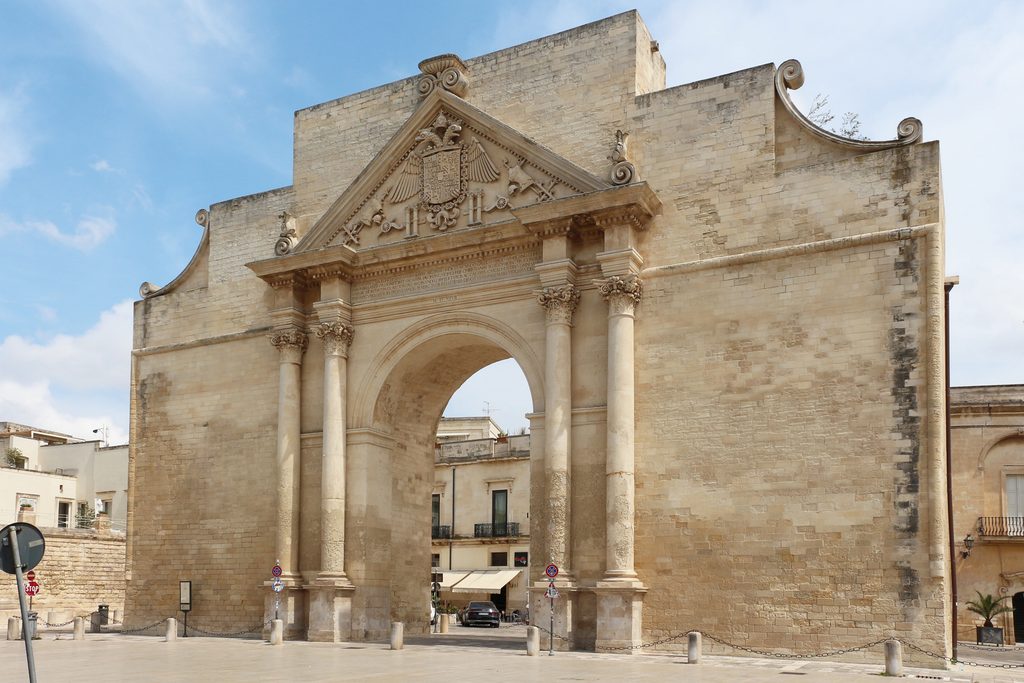
A great place to begin your day in Lecce is Porta Napoli, one of the monumental gateways leading into the historic center.
The gate was built in the 16th century in honor of Emperor Charles V and still serves as one of the symbolic entrances to the oldest part of the city.
Walk through the gate, leave the modern traffic behind, and begin exploring the narrow streets of the old town.
Walking is one of the best ways to experience Lecce. Small courtyards, stone balconies, artisan workshops, and beautiful Baroque façades appear around almost every corner.
Recommended time: around 15–20 minutes.
Basilica di Santa Croce: A Masterpiece of Lecce Baroque
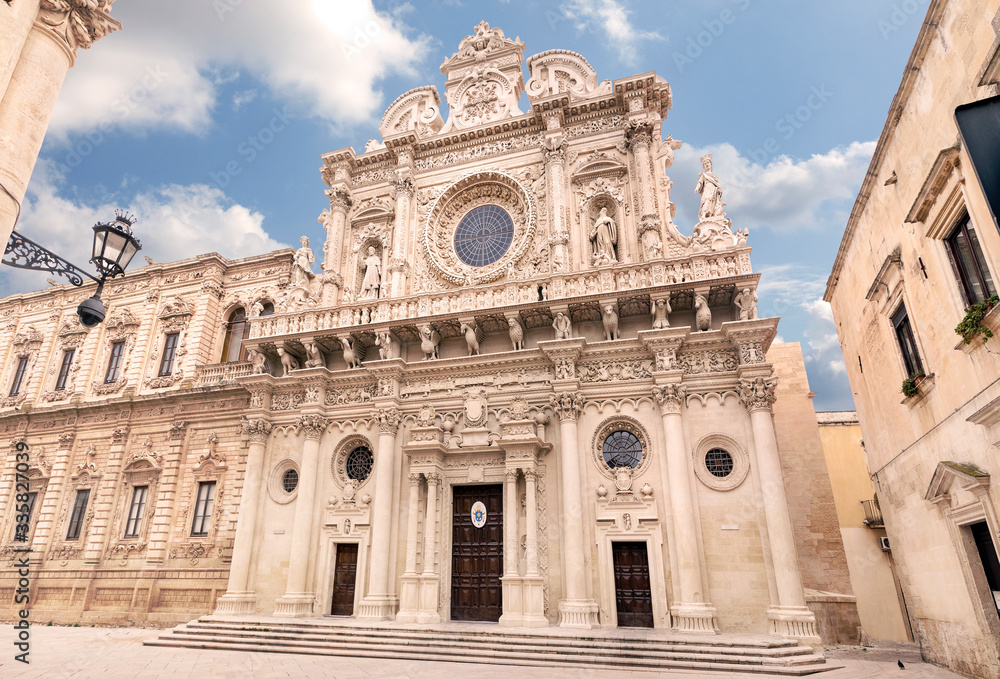
Continue toward one of Lecce’s most iconic monuments: the Basilica di Santa Croce.
Its spectacular façade is one of the finest examples of Lecce Baroque architecture.
Take a few minutes to appreciate the details. Columns, animals, symbolic figures, floral motifs, and intricate stone carvings combine to create an extraordinarily elaborate composition.
One of its most recognizable features is the large central rose window.
Next to the basilica stands Palazzo dei Celestini, another important historic building and an impressive example of the city’s architectural heritage.
Don’t just admire Santa Croce from outside. If the basilica is open during your visit, step inside to explore its beautiful interior as well.
Recommended time: 30–40 minutes.
Tickets for Santa Croce and Lecce’s Baroque Churches
To visit the Basilica di Santa Croce, you need to purchase a ticket through the official website Chiese Lecce.
The ticket costs €11 and gives you access to several of Lecce’s most important religious and cultural landmarks with a single pass:
- Basilica di Santa Croce
- Lecce Cathedral (Duomo)
- Church of San Matteo
- Church of Santa Chiara
- Ancient Seminary
- Museum of Sacred Art
This combined ticket is a convenient option if you’re following our one-day itinerary, as several of these attractions are located within easy walking distance of one another in Lecce’s historic center.
Tip: Check current opening hours and ticket conditions before your visit, especially during religious celebrations and public holidays.
Official ticket website: www.chieselecce.it
Piazza Sant’Oronzo and the Roman Amphitheater
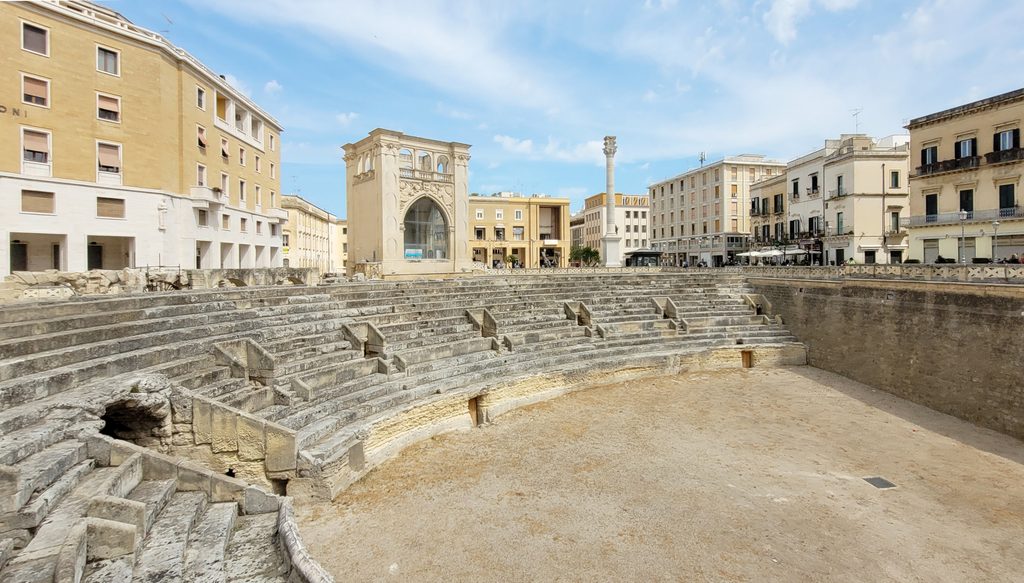
From Santa Croce, it is only a short walk to Piazza Sant’Oronzo, one of Lecce’s main gathering places.
The square perfectly reflects the different periods of the city’s long history.
Here, buildings from different eras stand alongside one of Lecce’s most important archaeological sites: the Roman Amphitheater.
Built during the Roman period, the amphitheater could once accommodate thousands of spectators. Today, only part of the structure is visible, while much of it remains buried beneath the modern city.
You will also see the Column of Sant’Oronzo, dedicated to Lecce’s patron saint.
Spend a few moments exploring the square and imagine what this part of the city might have looked like almost two thousand years ago.
Recommended time: around 30 minutes.
Take a Break for Pasticciotto and Caffè Leccese
Now it’s time for a well-deserved break.
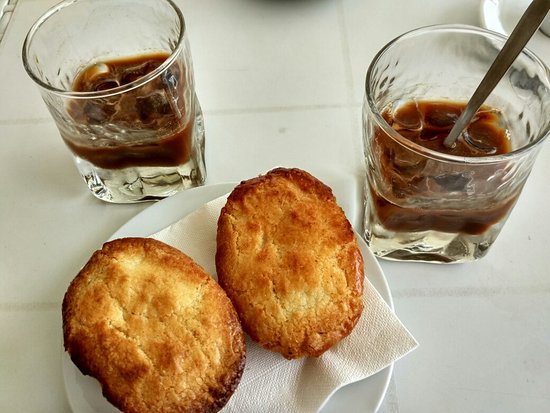
If there is one sweet treat you should try during your day in Lecce, it is the traditional pasticciotto leccese.
This small pastry is made with shortcrust pastry and traditionally filled with custard. The best time to eat one? When it is still slightly warm.
Pair it with another local favorite: caffè leccese, made with espresso, ice, and almond milk.
It is a simple but delicious combination, especially refreshing during the warmer months.
Piazza del Duomo: One of Lecce’s Most Beautiful Squares
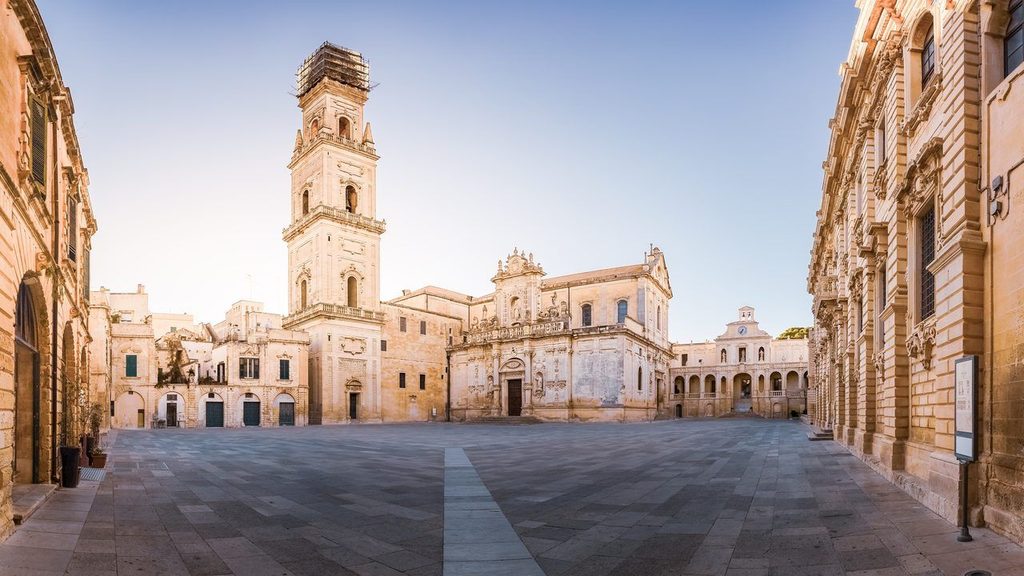
After your break, head toward Piazza del Duomo.
Entering the square is one of the most memorable moments of a visit to Lecce.
Unlike many traditional Italian piazzas, Piazza del Duomo has a relatively narrow entrance that suddenly opens onto an impressive monumental space surrounded by some of the city’s most important religious buildings.
Here you will find Lecce Cathedral (Duomo), the Duomo Bell Tower, the Bishop’s Palace, and the Ancient Seminary.
The bell tower, rising high above the surrounding buildings, is one of the most recognizable features of Lecce’s skyline.
During the day, the local limestone takes on beautiful warm and golden tones. The square is equally atmospheric in the evening, when its historic buildings are illuminated.
If you purchased the combined €11 ticket for Santa Croce, admission to the Cathedral and the Ancient Seminary is already included.
Recommended time: 40–50 minutes.
Wander Through Lecce’s Historic Center
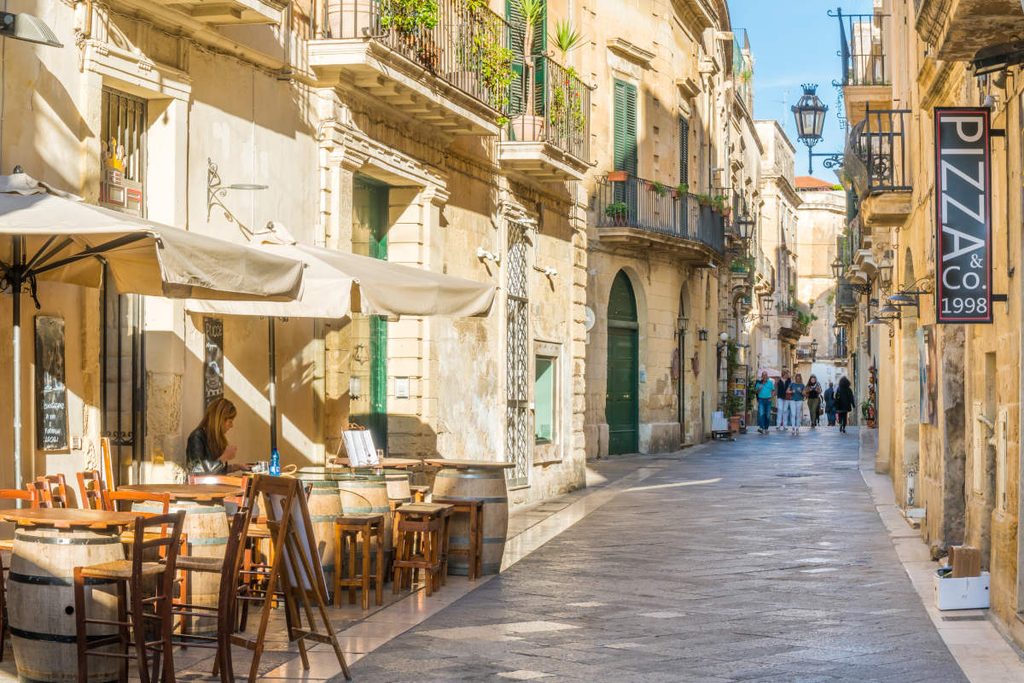
After visiting the main monuments, give yourself some time to do something that is almost as important as visiting Lecce’s churches and museums: wander through the old town without a strict itinerary.
You don’t always need to follow a map.
Walk through narrow streets, small squares, and past historic palaces while paying attention to the beautifully decorated balconies and doorways carved from local limestone.
Along the way, you may also come across small workshops dedicated to traditional local crafts.
One of Lecce’s most distinctive artistic traditions is papier-mâché, which has historically been used to create religious statues and decorative works of art.
This is also a good opportunity to shop for local products or simply sit in a small piazza and watch everyday life unfold around you.
Porta Rudiae
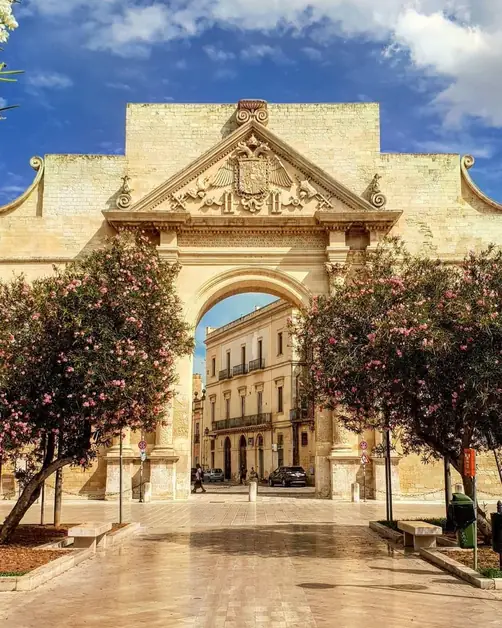
Continue through the historic center toward Porta Rudiae, another of Lecce’s monumental gateways.
The gate takes its name from the ancient road that once led toward Rudiae, an ancient Messapian settlement associated with the Roman poet Quintus Ennius.
The present structure dates mainly from the early 18th century and features elaborate Baroque decoration.
From here, you can make your way back toward the heart of the old town while continuing to explore its streets.
Recommended time: around 20 minutes.
Lunch: What to Eat in Lecce
A day in Lecce wouldn’t be complete without discovering the flavors of Salento.
Some local dishes and specialties worth trying include:
- Ciceri e tria – a traditional pasta and chickpea dish in which part of the pasta is fried.
- Orecchiette – Puglia’s famous ear-shaped pasta, served with a variety of traditional sauces.
- Fave e cicorie – puréed fava beans served with chicory, a simple dish rooted in the region’s rural traditions.
- Puccia salentina – a round local bread that can be filled with a variety of ingredients.
- Rustico leccese – puff pastry traditionally filled with béchamel, tomato, and mozzarella.
- Frisella – twice-baked bread typically topped with tomatoes, extra-virgin olive oil, and other Mediterranean ingredients.
If you want to continue sightseeing during the afternoon, consider keeping lunch relatively light and saving a longer culinary experience for dinner.
Afternoon: Castello Carlo V

After lunch, head toward Castello Carlo V, located just a short walk from Piazza Sant’Oronzo.
The fortress was expanded during the 16th century under Emperor Charles V and formed an important part of Lecce’s defensive system.
Its imposing architecture is much more austere than the elaborate Baroque churches of the historic center, offering visitors a glimpse into another side of Lecce’s history.
Accessible areas and temporary exhibitions may vary, so it is worth checking opening hours and current visitor information before your trip.
The entrance ticket to Castello Carlo V costs €10 and can be purchased online through the castle’s official website at www.ilcastellodilecce.it.
It is a good idea to check the official website before your visit for the latest opening hours, available tours, and any temporary exhibitions or changes to visitor access.
Recommended time: 30–60 minutes, depending on the areas open to visitors.
Church of San Matteo
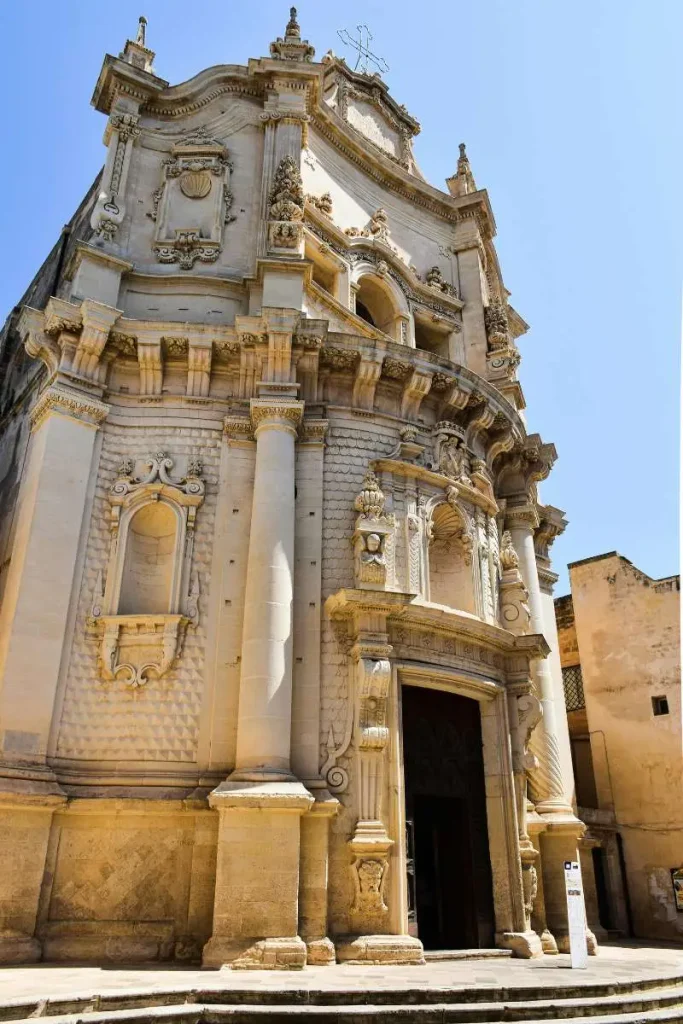
If you still have time, make your way to the Church of San Matteo.
Its distinctive Baroque façade, characterized by an unusual combination of concave and convex surfaces, makes it stand out among Lecce’s many churches.
It is a particularly interesting stop for travelers who want to explore Lecce’s Baroque architecture beyond the city’s most famous landmarks.
Admission is included in the €11 combined ticket, so if you purchased it earlier in the day, this is the perfect opportunity to make the most of it.
Late Afternoon: Explore Without a Plan
By this point, you will have seen many of Lecce’s main attractions.
Instead of filling every remaining minute with more sightseeing, use the late afternoon to simply enjoy the city.
Walk back toward Piazza Sant’Oronzo, browse local shops, stop for an aperitivo, or explore a street that caught your attention earlier in the day.
Lecce is one of those cities that becomes even more enjoyable when you slow down.
Evening in Lecce
If you can stay until the evening, do it.
As the sun begins to set and temperatures become more comfortable—especially during summer—the historic center takes on a different atmosphere.
Illuminated Baroque façades, outdoor tables, and locals and visitors strolling between Piazza Sant’Oronzo and the surrounding streets make the old town particularly lively.
For dinner, choose a traditional trattoria and try more dishes from Salento’s cuisine, perhaps accompanied by a local wine.
Two wines you will often encounter in this part of Puglia are Negroamaro and Primitivo.
Ending your day with an evening walk through Lecce’s illuminated historic center is one of the best ways to say goodbye to the city.
Best Time to Visit Lecce
Lecce can be visited throughout the year, but spring and early autumn are particularly pleasant for exploring the city on foot.
Summer can be very hot, especially during the middle of the day. If you visit Lecce during the warmer months, consider doing most of your sightseeing in the morning and late afternoon.
Summer does, however, offer one major advantage: you can easily combine a city break in Lecce with a few days exploring the beautiful beaches of Salento.
Is One Day in Lecce Enough?
Yes, one day is enough to see many of Lecce’s main attractions.
The historic center is relatively compact, and most of the major landmarks can easily be reached on foot.
Two days will give you more time to explore at a slower pace, visit additional churches and museums, and enjoy more of the city’s food scene.
If you have several days available, Lecce can also serve as an excellent base for exploring the rest of Salento.
FAQ: Visiting Lecce in One Day
Can You Explore Lecce on Foot?
Yes. Lecce’s historic center is compact, and many of its main attractions are located relatively close to one another. For a one-day itinerary, walking is generally the easiest and most enjoyable way to explore the city.
What Should You Not Miss in Lecce?
Some of Lecce’s essential landmarks include the Basilica di Santa Croce, Piazza del Duomo, and Piazza Sant’Oronzo with its Roman Amphitheater.
What Is Lecce Famous For?
Lecce is particularly famous for Lecce Baroque architecture, its distinctive local limestone, its historic center, and the traditional cuisine of Salento.
Is Lecce Worth Visiting?
Absolutely. Lecce combines Baroque architecture, Roman history, local culture, traditional food, and a distinctly southern Italian atmosphere, making it an excellent addition to any itinerary through Puglia.
How Much Time Do You Need in Lecce?
One full day is enough to experience many of the city’s highlights. With two days, you can explore at a more relaxed pace and dedicate additional time to museums, churches, local cuisine, and the atmosphere of the historic center.
What Is the Best Time of Year to Visit Lecce?
Spring and early autumn generally offer comfortable temperatures for sightseeing. Summer is ideal if you want to combine Lecce with a beach holiday in Salento, although daytime temperatures can be high.
Is Lecce Worth Visiting for Just One Day?
Definitely.
Lecce packs centuries of history, extraordinary Baroque architecture, Roman remains, and culinary traditions into a relatively compact historic center.
In just one day, you can walk through Porta Napoli, admire the Basilica di Santa Croce, stand beside an ancient Roman amphitheater, enter the magnificent Piazza del Duomo, and taste some of Salento’s most iconic flavors.
But your favorite memory of Lecce may not be a single monument.
It might be the golden light reflecting off the local limestone, a warm pasticciotto, a beautiful street you discovered by accident, or an evening walk through the old town.
And that is part of Lecce’s charm: it is not simply a city to see, but a city to experience.